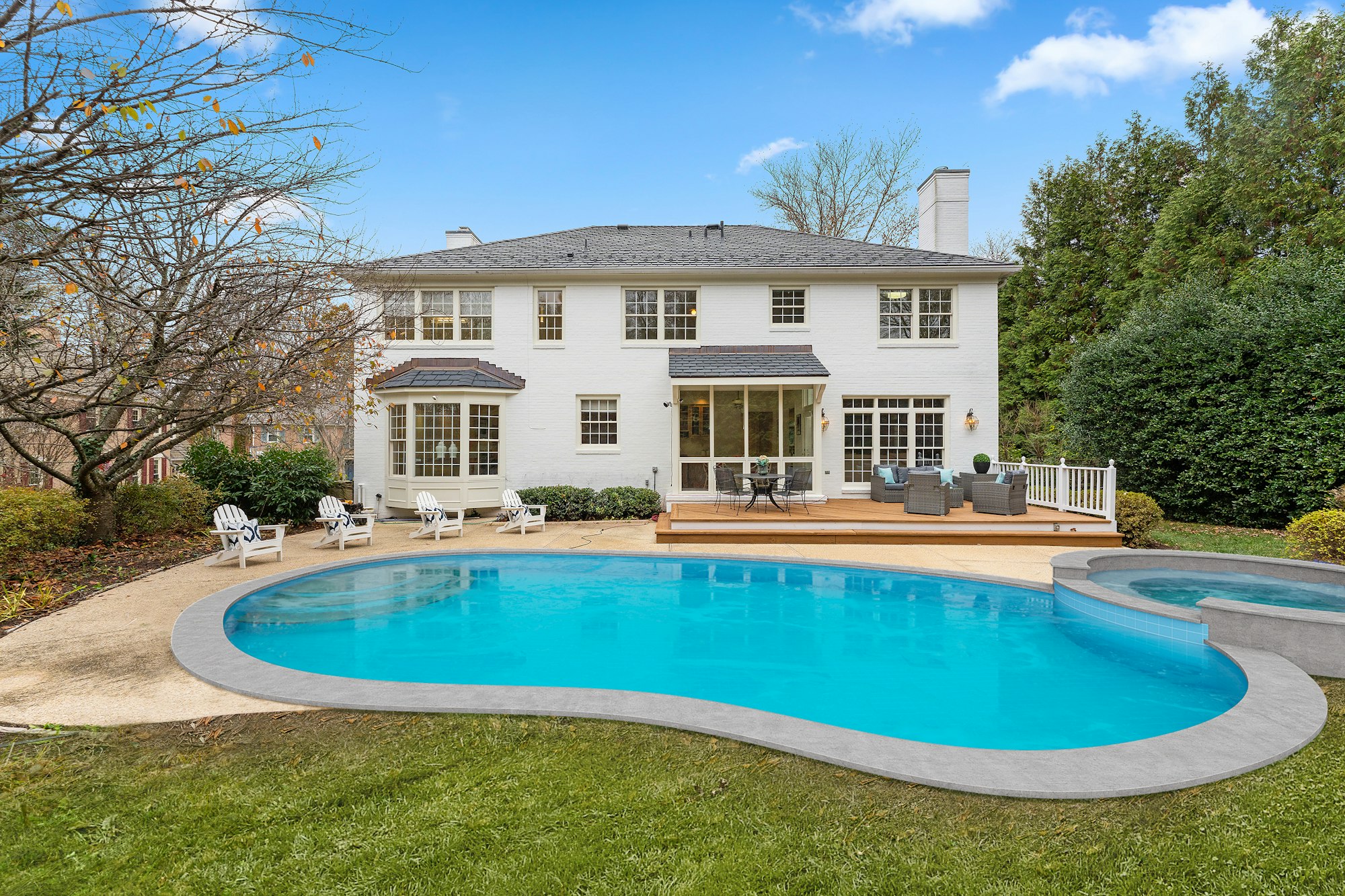
The upfront cost gap, honestly
- Above-ground pool
- Typically $1,500-$6,000 for the pool itself including a basic pump/filter setup, installed — a fraction of inground pricing, which is the main reason above-ground remains the accessible entry point into pool ownership.
- Inground pool
- Commonly $35,000-$80,000+ depending on size, material (vinyl, fiberglass, or gunite), and regional labor cost — a genuinely large upfront commitment that above-ground simply doesn't require.
This gap is the single biggest factor in most buying decisions, and it's real — but it's also just the starting line. What actually determines total cost of ownership is everything that happens over the following 10-15 years.
Running costs: closer than people expect
The common assumption is that above-ground pools are simply cheaper to run across the board — this is often true, but mainly because above-ground pools tend to be smaller, not because of the above-ground vs inground distinction itself. A large above-ground pool with a full-size pump can cost more to run than a small, efficiently equipped inground pool.
- Pump running cost
- Scales with pool volume and pump size more than pool type — see our above-ground and inground pump guides for real running-cost numbers by size and pump type.
- Chemical cost
- Scales directly with water volume — a larger inground pool needs proportionally more chemical than a smaller above-ground pool, regardless of type.
- Heating cost
- Inground pools are more commonly heated (and more likely to be used for a longer swim season as a result), which is a real cost difference in practice even though it's driven by usage pattern rather than the pool type itself. See our pool heaters guide.
Lifespan and major replacement costs — a genuine, structural difference
This is where the two types actually diverge in a way that's not just about size.
- Above-ground pool structural lifespan
- Commonly 10-20 years for the frame and wall before replacement becomes the practical choice over repair — vinyl liners within that lifespan typically need replacing every 6-12 years, at a few hundred to around a thousand dollars each time.
- Inground pool structural lifespan
- A well-built gunite or fiberglass shell can genuinely last several decades — but the surface finish needs periodic renewal: plaster resurfacing roughly every 10-15 years, commonly several thousand to over ten thousand dollars depending on size and finish quality.
- What this means over a real ownership timeline
- An above-ground pool owner is more likely to face a full pool replacement within 15-20 years; an inground pool owner is more likely to face one or two expensive resurfacing events in the same period, with the shell itself remaining intact far longer. Neither is "free" long-term — the costs just land differently.
Resale value: a real but often overstated factor
A common assumption is that an inground pool is a straightforward home-value investment. In practice, most real estate research suggests an inground pool typically recovers somewhere between 30-60% of its installation cost in added home value, varying significantly by region, local climate, and how common pools are in the local market — in some hot, pool-common markets it can do better; in cooler climates or pool-uncommon areas, it can even be a net negative for some buyers who see it as a maintenance burden. An above-ground pool generally adds little to no resale value and is sometimes viewed neutrally-to-negatively by buyers, since it's understood as a removable, depreciating asset rather than permanent property improvement.
The realistic takeaway: view either as primarily a lifestyle investment rather than a financial one, and don't let assumed resale value be the deciding factor in the upfront cost decision.
Insurance and property tax considerations
- Homeowner's insurance
- Both pool types typically increase liability coverage requirements and premiums somewhat, though an inground pool (viewed as a permanent structure) is more consistently factored into standard policy calculations than an above-ground pool, which some insurers treat differently.
- Property tax
- An inground pool is a permanent structural improvement in most jurisdictions and can increase assessed property value (and therefore property tax) accordingly. An above-ground pool, being removable, is less consistently taxed this way, though rules vary meaningfully by local jurisdiction — worth checking locally rather than assuming either way.
A real 15-year cost scenario, worked through
Numbers are more useful with a concrete example attached. Take a mid-range above-ground pool ($4,000 installed) against a mid-range inground pool ($55,000 installed), both moderately sized and moderately used, over a 15-year ownership period.
- Above-ground scenario
- $4,000 upfront + roughly $700/year running costs (chemicals, electricity) × 15 years ($10,500) + two liner replacements at ~$700 each ($1,400) + one full pool replacement around year 15 if the frame is at end of life ($4,000, though this may land just outside the 15-year window depending on quality) ≈ $15,900-$19,900 total.
- Inground scenario
- $55,000 upfront + roughly $1,200/year running costs × 15 years ($18,000) + one resurfacing around year 12 ($8,000) ≈ $81,000 total, partially offset by an estimated 30-60% resale value recovery (roughly $16,500-$33,000 back if sold) — netting somewhere around $48,000-$64,500 real cost if resale value is realized.
Even with generous resale-value assumptions, inground remains substantially more expensive across this timeframe — the point of the exercise isn't that above-ground is "better," but that the true multi-year gap is smaller in percentage terms than the raw installation-cost comparison alone suggests, since inground's resale value partially closes what looks like an enormous gap at the point of purchase.
Financing considerations
- Above-ground pools
- Rarely need dedicated financing given the lower cost — many owners pay upfront or use a standard personal loan or existing credit if needed, without the pool itself being tied to the loan structure.
- Inground pools
- Commonly financed through a dedicated pool loan, a home equity line of credit, or a cash-out refinance, given the size of the expense — interest cost on financing should be factored into the true cost comparison if you won't be paying cash, since it can add a meaningful percentage to the effective total cost over the loan term.
Regional cost variation is significant
Every dollar figure in this guide is a national ballpark — actual installation and running costs vary substantially by region. Inground installation cost in particular swings heavily with local labor rates, soil/rock conditions (excavation through rock costs meaningfully more than through easy soil), and how competitive the local pool-building market is. Above-ground running costs vary less by installation region but still shift with local electricity pricing and climate (a longer swim season means more running hours). Get at least two or three local quotes for an inground pool specifically before treating any national average as your actual expected cost — the spread between regions, and even between contractors in the same region, is often larger than people expect.
Installation and site factors that affect the real cost
Ground preparation and access
Inground installation cost varies significantly with site difficulty — sloped yards, poor soil conditions, or difficult equipment access can push costs well above the baseline range. Above-ground installation is far less sensitive to site conditions, needing only a reasonably level, prepared pad.
Permits and code requirements
Both typically require permits and safety compliance (fencing, alarms — see our glossary for VGB drain cover requirements), but inground installation generally involves a more extensive permitting and inspection process given its permanent nature.
Removal cost if you change your mind
An above-ground pool can be removed relatively cheaply if a future owner or your own future plans don't want it. Removing an inground pool is a genuinely expensive demolition project, commonly costing thousands of dollars — worth factoring in as a form of long-term flexibility difference between the two options.
Beyond cost: what money can't fully compare
This guide has deliberately focused on cost because that's the question it's answering, but it's worth acknowledging directly that the decision usually isn't purely financial for most buyers. An inground pool typically offers a more integrated, permanent backyard feature — often paired with matching decking, landscaping, and a look that feels like part of the house rather than an addition to the yard. An above-ground pool offers flexibility (removable, relocatable, a lower-commitment way to try pool ownership) that an inground pool structurally can't match. Neither of these experiential differences shows up on a spreadsheet, but they're frequently the actual deciding factor once the cost comparison has been honestly worked through — cost comparison narrows the decision, it doesn't always make it for you.
Putting it together: which actually costs less over 10-15 years?
For most typical residential setups, an above-ground pool remains the lower total-cost option over a 10-15 year window, mainly driven by the enormous upfront cost gap that ongoing running-cost and resurfacing differences rarely fully close. But the gap is smaller than the sticker-price difference alone suggests, once running costs, structural lifespan, and eventual replacement/resurfacing are all accounted for — and for a buyer who genuinely wants an inground pool for the experience, lifestyle, and permanence it offers, the extra cost is buying something an above-ground pool structurally can't replicate, not just a bigger price tag for the same thing.
A middle-ground option worth knowing about
Between fully above-ground and fully inground sits a category sometimes called a semi-inground or partially recessed pool — installed into a slope or partial excavation, with the wall partly above grade. These typically cost somewhere between above-ground and full inground pricing, and can offer a more integrated look than a standard above-ground pool without the full excavation and shell cost of a traditional inground build. Worth researching specifically if your yard has a natural slope that makes full excavation more expensive than it would be on flat ground, since a semi-inground design can sometimes work with the terrain rather than against it.
If you're still deciding
Rather than trying to resolve the decision purely on the numbers above, it can help to work through it as a short set of practical questions: How long do you realistically expect to stay in this home? A shorter horizon favors above-ground's lower commitment and easier removal; a longer horizon gives an inground pool more time to be enjoyed relative to its upfront cost. Is this your first pool, or have you owned one before? First-time owners sometimes benefit from the lower stakes of above-ground before committing to a permanent inground installation. And honestly — which one do you actually picture when you imagine using the pool day to day? For a decision this size, the answer to that last question often matters as much as any of the cost math above.
Whichever direction you're leaning, get real quotes and real numbers for your specific situation before committing — every figure in this guide is a national ballpark, and the actual gap for your yard, region, and preferred pool size could land meaningfully differently.
Common questions
Does an above-ground pool really cost less to run than an inground one?
Usually, mainly because above-ground pools tend to be smaller and use smaller pumps and less chemical volume — but the gap is more about pool size than the above-ground vs inground distinction itself. A large above-ground pool can cost more to run than a small inground one.
Does an inground pool add more resale value than it costs?
Rarely fully — most real estate research suggests an inground pool typically recovers somewhere between 30-60% of its installation cost in added home value, varying significantly by region and local pool demand. It's realistic to view it as a lifestyle investment more than a financial one.
How much does an above-ground pool liner replacement cost compared to inground resurfacing?
An above-ground liner replacement is typically a few hundred to around a thousand dollars; inground resurfacing (replastering, or a new fiberglass gel coat) commonly runs several thousand to over ten thousand dollars depending on pool size and finish type — a meaningful ongoing cost gap over a pool's lifetime.
Which type lasts longer?
A well-built inground pool shell (gunite or fiberglass) can genuinely last several decades with proper resurfacing along the way. Above-ground pools have a shorter structural lifespan, commonly 10-20 years for the frame and wall, before replacement becomes the practical choice over repair.