This guide contains Amazon links. As an Amazon Associate, Backyard Pool Tips earns from qualifying purchases — see our affiliate disclosure. Recommendations are based on suitability and running cost, not commission.
The payback math, worked through properly
This is where variable-speed pumps genuinely earn their higher price tag — unlike smaller above-ground pools (see our above-ground pump guide), inground systems typically run longer daily cycles on bigger pumps, which is exactly the situation where variable speed pays for itself fastest.
A single-speed inground pump commonly draws around 1.5 kWh running flat-out, with no way to slow down. Running 8 hours a day at a typical residential rate of $0.16/kWh, that's about $1.92 a day — roughly $700 a year in electricity for the pump alone.
A variable-speed pump doing the same job at a lower, filtration-appropriate speed can draw as little as 0.3–0.5 kWh average across that same runtime — around $0.38–0.64 a day, or roughly $140–230 a year. That's a saving of $470–560 a year. Against a variable-speed pump that typically costs $400–700 more upfront than a comparable single-speed unit, the payback period lands around 1–1.5 years. Every year after that is straightforward savings.
Sizing for your plumbing
Inground pools are plumbed with wider, longer pipe runs than above-ground setups — commonly 1.5" or 2" pipe. Pipe diameter caps how much flow you can actually push through without excessive friction loss, noise, and wasted energy, regardless of how powerful the pump is. As a rough guide:
- 1.5" plumbing
- Most single-speed and variable-speed pumps in the 1–1.5 HP range are a reasonable match.
- 2" plumbing
- Can support higher-flow pumps, useful for larger pools or ones with water features and spa jets that need extra flow on demand.
Buying a pump rated well beyond what your existing pipe can handle doesn't get you more performance — it just adds noise and pushes water through undersized pipe less efficiently. If you're unsure what you're plumbed with, a pool professional can check in a few minutes.
Rebates and regulations are worth checking
Several US states and utilities now require or heavily incentivize variable-speed pumps for new pool construction and pump replacements, and many electricity providers offer rebates that can meaningfully offset the upfront price difference. Check your local utility's website before buying — a rebate can shorten an already-short payback period even further, and in some areas a single-speed replacement pump may not be compliant with current rules at all.
What else is worth checking beyond speed
- Plumbing unions
- Confirm the new pump matches your current pipe size and connection type before ordering.
- Automation & salt compatibility
- Most modern variable-speed pumps play well with common automation controllers and salt chlorinators, but it's worth confirming for anything more than a few years old.
- Warranty length
- Variable-speed pumps commonly carry longer warranties (2–3 years) than budget single-speed units, reflecting the more complex electronics inside.
- Noise at low speed
- A genuinely variable-speed pump is noticeably quieter running its long daily filtration cycle at low RPM than a single-speed pump running flat-out for the same job.
How long should an inground pump last?
A well-maintained inground pump — single-speed or variable-speed — commonly runs 8–12 years before the motor needs replacing, longer than typical above-ground pumps thanks to heavier-duty construction and the equipment usually sitting in a proper enclosure out of direct weather. Variable-speed pumps also tend to run cooler at their lower everyday speeds, which can extend motor life further. If a pump older than that starts showing the symptoms covered in our pump and filter troubleshooting guide, it's often more cost-effective to replace it — parts for a pump nearing end of life can add up fast, and a new variable-speed unit will usually pay part of its own cost back in electricity savings regardless.
Five pumps worth considering
Skewed toward variable-speed given the payback math above, with one dual-speed budget option for anyone not ready for the full jump.
Pentair SuperFlo VS
Variable-speed · Pentair
Strengths
- Proven reliability and wide service network
- Strong energy efficiency at typical filtration speeds
- Quiet operation
Trade-offs
- Costs more upfront than budget single-speed pumps
- Full efficiency gains depend on adequately sized plumbing
Best for: most inground pools where established-brand reliability and easy servicing matter as much as the running-cost saving.
Check current price on Amazon →Hayward W3SP2603VSP Super Pump VS
Variable-speed · Hayward
Strengths
- Energy-efficient across a wide speed range
- Widely available parts and service
- Quiet at typical filtration speeds
Trade-offs
- Onboard programming interface is less intuitive than some rivals
Best for: owners who want an equally well-supported alternative to Pentair, particularly if other Hayward equipment is already in place.
Check current price on Amazon →BLACK+DECKER 1.5 HP Variable Speed Pool Pump
Variable-speed · BLACK+DECKER
Strengths
- Genuine variable-speed savings at a lower price point
- Solid mid-range flow for most inground pools
Trade-offs
- Fewer years of long-term reliability data than legacy pool-specific brands
Best for: budget-conscious owners who still want the real running-cost benefit of true variable speed, not just a dual-speed compromise.
Check current price on Amazon →Pentair WhisperFlo VST
Variable-speed · Pentair
Strengths
- Very quiet even at higher flow settings
- Strong flow headroom for larger pools or water features
Trade-offs
- Highest upfront cost of this list
- More pump than a smaller standard pool typically needs
Best for: larger inground pools, or ones running spa jets or water features that need real flow headroom on top of everyday filtration.
Check current price on Amazon →AQUASTRONG Dual-Speed Pool Pump with Timer
Dual-speed · AQUASTRONG
Strengths
- Lower upfront cost than any true variable-speed pump here
- Built-in timer, low-speed setting cuts some running cost
Trade-offs
- Not true variable-speed — a couple of fixed speeds, not a full range
- Smaller efficiency gain than the payback math above assumes
Best for: a stopgap or tightest-budget option — a real step up from single-speed, but not a substitute for true variable-speed savings.
Check current price on Amazon →Our verdict by scenario
- Most inground pools
- The Pentair SuperFlo VS is the safe, well-supported choice for proven reliability.
- Alternative brand
- The Hayward Super Pump VS matches the SuperFlo VS closely.
- Tightest budget
- The BLACK+DECKER gets you real variable-speed savings for less.
- Larger pool / water features
- Step up to the Pentair WhisperFlo VST for the flow headroom.
- Not ready for full VS pricing
- The AQUASTRONG dual-speed is a genuine, if smaller, step up from single-speed.
Check local utility rebates before you buy — on an inground pool, they can shorten an already-short payback period even further.
Dual-speed vs true variable-speed — what's the real difference?
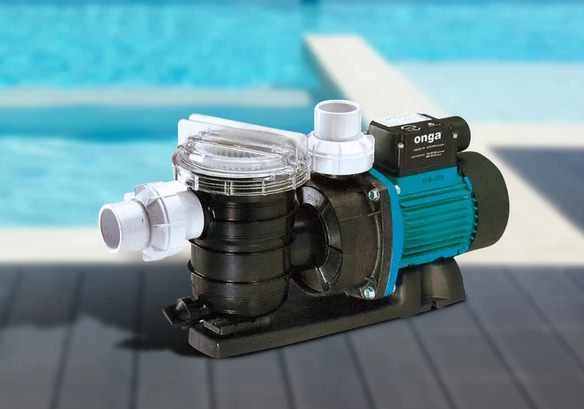
A dual-speed pump (like the AQUASTRONG above) gives you two fixed speeds to choose from — typically a high setting for cleaning or spa jets, and a low setting for everyday filtration. A true variable-speed pump gives you a full range, letting you dial in the exact speed your pool actually needs rather than picking the closer of two presets. That fuller range is where most of the extra efficiency comes from: running at, say, 40% of a pump's flow uses roughly 6–8% of the power a single fixed high speed would, since pump power draw drops with roughly the cube of speed. A dual-speed pump's fixed "low" setting is rarely tuned quite that precisely to your specific pool, so it captures some of the saving but not all of it — which is exactly why the payback math earlier in this guide assumes true variable-speed, not dual-speed.
Common questions
Is a variable-speed pump really worth the extra cost for an inground pool?
In most cases, yes — typical payback is 1–2 years from electricity savings alone, and the pump keeps saving money for years after that on a system that usually runs 8+ hours a day.
Do I need an electrician to install a variable-speed pump?
Many variable-speed pumps use standard 115/230V wiring compatible with an existing single-speed connection, but requirements vary by model — check the specific pump's electrical spec before assuming a straight swap.
Will a variable-speed pump work with my existing automation or salt system?
Most modern variable-speed pumps are compatible with common pool automation and salt chlorination systems, but older automation controllers can be an exception — check compatibility before buying.
How low can I run the speed and still keep the pool clean?
Lower than most people expect. Filtration needs enough time, not high flow, so many owners run an extended low-speed cycle (10+ hours) at a fraction of the flow rate a single-speed pump would use, and the water stays just as clean.