Telling them apart
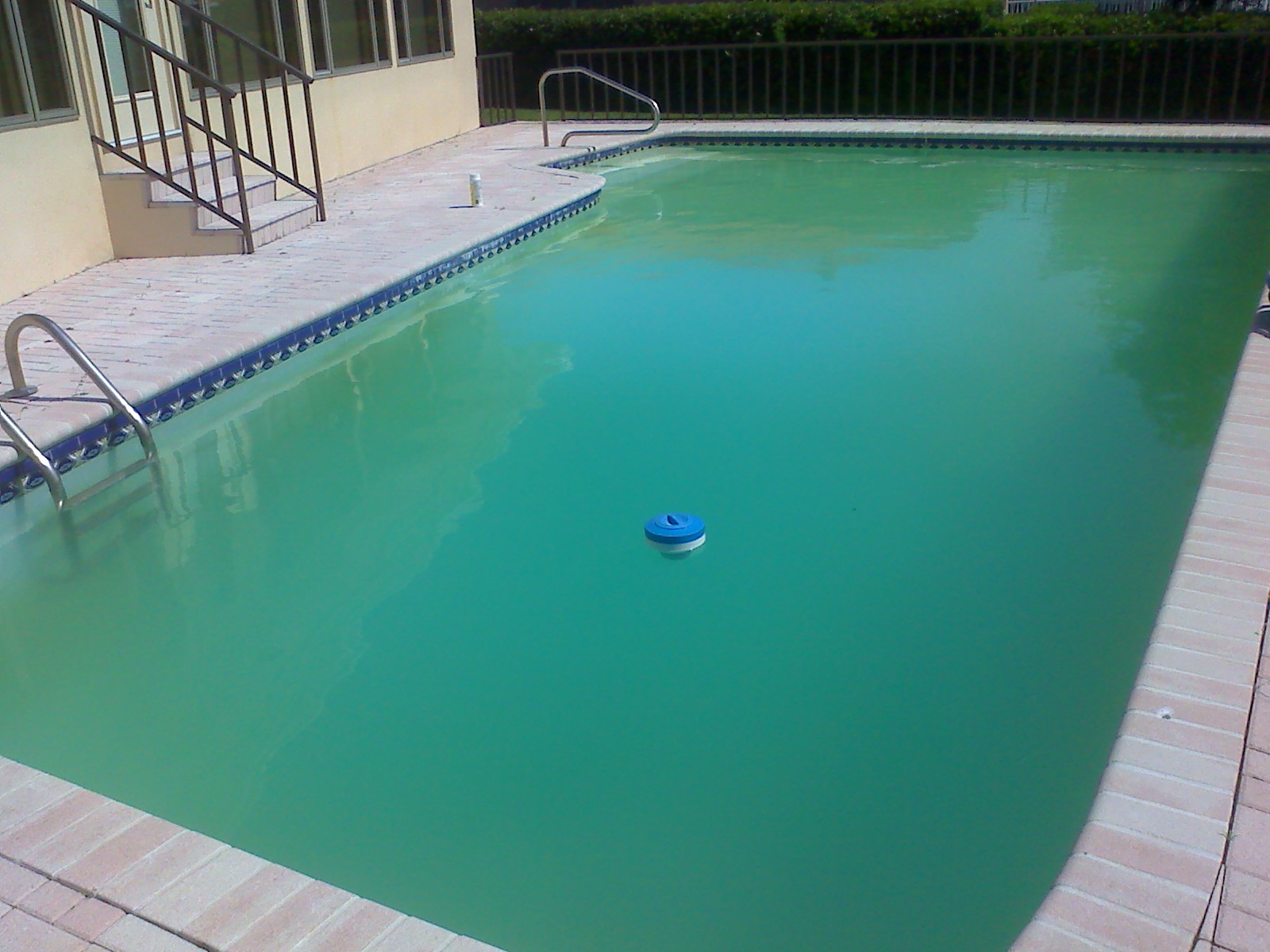
- Green algae
- Free-floating, suspended in the water and clinging loosely to surfaces — this is what turns pool water visibly green or hazy, and it's the type covered in our green pool guide. Comes off easily with a brush and clears with a standard shock treatment.
- Black algae (technically cyanobacteria)
- Appears as small, dark blue-black or slate-colored spots or blotches, usually on rougher surfaces like plaster, grout lines, or pool steps rather than smooth tile or vinyl. Doesn't cloud the water the way green algae does — it stays localized to specific spots.
The visual difference is usually clear once you know what to look for: green algae is a water-clarity problem, while black algae is a surface problem that leaves the water looking relatively normal.
Why black algae is genuinely harder to treat
What's commonly called black algae isn't actually the same category of organism as green or yellow/mustard algae — it's typically a type of cyanobacteria, which builds a tough, protective outer layer over itself. That layer is the whole reason black algae is such a persistent problem: normal chlorine levels that would easily kill green algae simply can't penetrate it. On top of that, black algae sends root-like structures down into porous surfaces like plaster and grout, anchoring itself below the visible surface layer — which is why it can reappear in the same exact spot weeks after treatment looks successful.
This combination — a chlorine-resistant outer shell plus roots embedded below the surface — is why black algae specifically requires physical brushing as a mandatory step, not an optional one. Green algae can sometimes be cleared with a strong enough shock alone; black algae essentially never can.
Treating black algae step by step
-
Test and balance chemistry first
Get pH, alkalinity, and other parameters into range before starting — see our chemistry cheat sheet. Balanced water makes every following step more effective.
-
Brush every spot vigorously
Use a stiff-bristle brush (stainless steel bristles for plaster/concrete, softer nylon for vinyl or fiberglass to avoid surface damage) and scrub each spot hard enough to physically break open the protective outer layer. This step cannot be skipped or done lightly — it's the single most important part of the whole process.
-
Apply an algaecide formulated for black algae directly to each spot
A concentrated, black-algae-specific algaecide applied directly onto freshly brushed spots gets through the now-broken outer layer far more effectively than a general-purpose product added to the whole pool.
-
Shock the pool heavily
A strong chlorine-based shock — on the higher end of the algae-treatment dose range discussed in our shocking guide — follows the brushing and spot-treatment to attack the now-exposed organism.
-
Brush again over the following days
Repeat brushing the same spots daily for several days after the initial treatment — this disrupts any regrowth attempting to re-establish the protective layer before it can fully form again.
-
Run the filter continuously and watch closely for 1-2 weeks
Because of the root structures below the surface, black algae has a real chance of reappearing in the same spots — don't consider the job done until the treated areas have stayed clear for a couple of weeks, not just a couple of days.
A third type worth knowing: yellow (mustard) algae
Less commonly discussed than green or black, yellow algae (often called mustard algae) sits somewhere between the two in terms of difficulty. It appears as a yellowish-brown, sandy-looking film, usually on shaded walls and in corners, and — like black algae — resists normal chlorine levels reasonably well and tends to reappear if not treated thoroughly. It doesn't build the same tough protective layer or root structures as black algae, so it's generally easier to clear, but it still needs a proper brush-and-shock approach rather than the lighter treatment that works for straightforward green algae. If what you're looking at isn't clearly dark blue-black or the more typical bright green, it's worth considering this third category before assuming it must be one of the other two.
Where black algae shows up most, and why
Rough plaster, grout lines, and pool steps
Porous, textured surfaces give the roots something to anchor into — smooth surfaces like vinyl liners or glass tile are far less commonly affected for exactly this reason.
Shaded areas and spots with poor circulation
Corners, behind ladders, and other low-flow areas that don't get consistent contact with circulating, chlorinated water are more prone to establishing black algae in the first place.
Older or previously affected pools
A pool that's had black algae before is more likely to see it return, since the porous surface may still harbor remnants even after a successful-looking treatment — extra vigilance in previously affected spots is worth it.
Preventing it from establishing in the first place
Regular brushing of steps, corners, and any rough surface as part of routine maintenance is the single best prevention — it disrupts algae (of any color) before it can establish a foothold and, for the black algae type specifically, prevents the protective layer from ever forming. Keeping chlorine and circulation consistent, rather than letting either lapse for extended periods, closes the opportunity black algae needs to take hold. See our pool accessories guide for a wall and floor brush recommendation, and our chemistry cheat sheet for keeping chlorine consistently in range.
When to call a professional
Most black algae cases respond to the brush-and-shock process above within one to two treatment cycles. If it's still visibly present after a genuine, thorough attempt — full brushing, spot treatment, heavy shock, and repeat brushing over several days — a pool professional can assess whether the surface itself (badly degraded plaster or grout, for instance) is contributing to why it keeps establishing, which is a repair rather than a chemical problem at that point.
A note on patience
Black algae treatment genuinely takes longer than clearing green algae, and it's worth setting that expectation from the start rather than assuming a single shock-and-brush session will finish the job the way it often does for green. Budgeting for several days of repeat brushing and a couple of weeks of close watching afterward is the realistic timeline, not a sign the first treatment failed.
Common questions
Is black algae actually algae?
Not technically — what's commonly called black algae is usually a type of cyanobacteria. It behaves differently from true green algae, forming a tough protective outer layer and rooting into porous surfaces like plaster and grout, which is why it needs a different treatment approach.
Why won't normal chlorine levels kill black algae?
Its outer protective layer shields the organism from chlorine at normal sanitizing concentrations — it needs the outer layer physically broken open by brushing before chlorine can actually reach and kill it, which is why brushing is not optional for black algae the way it sometimes is for green.
Can black algae come back after treatment?
Yes, more often than green algae — its roots can persist in porous plaster or grout even after the visible growth is gone, so a spot that's had black algae once is worth watching closely for weeks after treatment, not just assumed clear.
Is black algae harmful to swim in?
It's not typically classified as a serious health hazard the way some other water contaminants are, but it's abrasive and unpleasant against skin, and its presence usually indicates broader water quality or circulation issues worth addressing regardless.