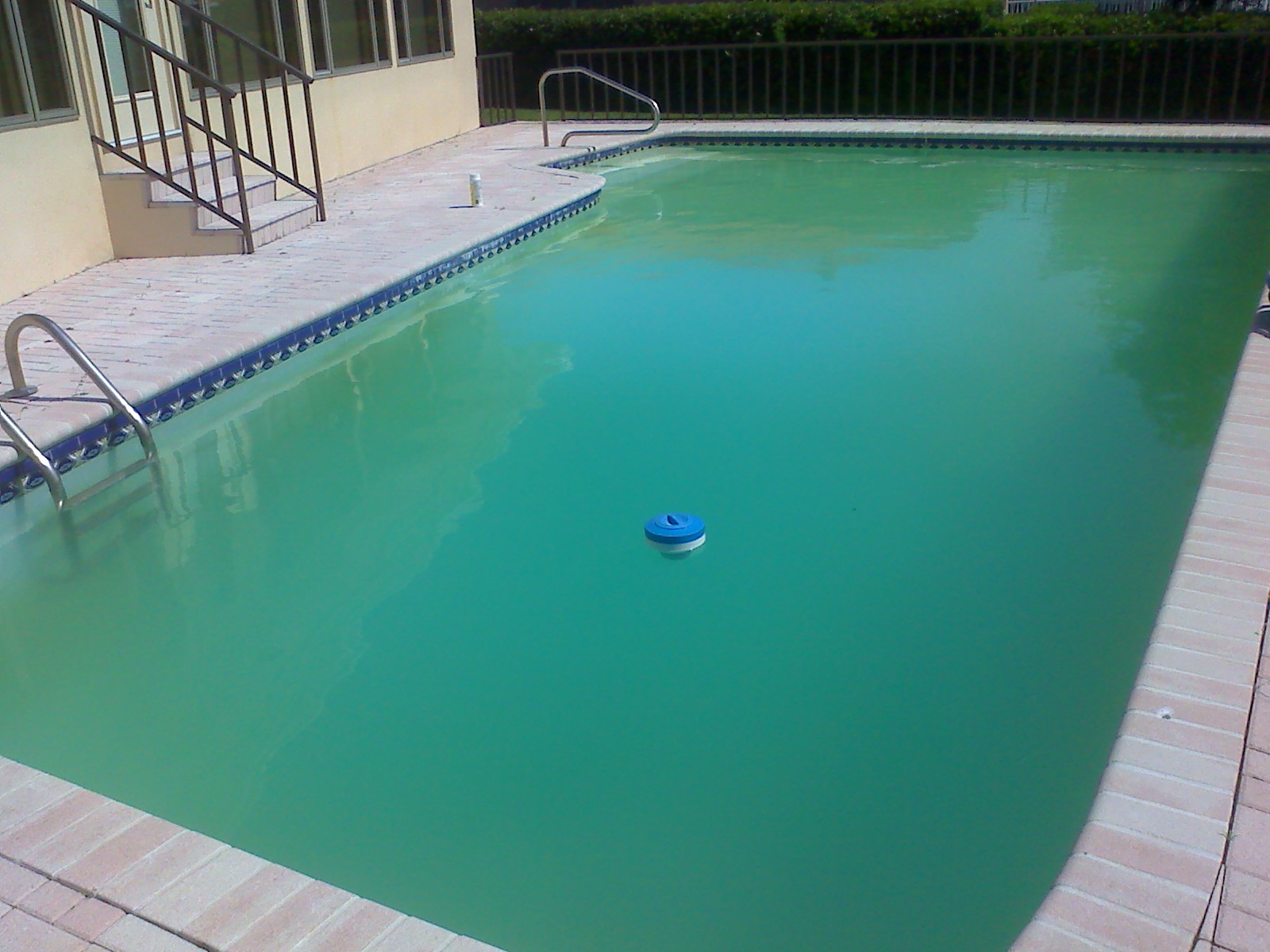
Why this is a different job than a normal opening
Our regular opening a pool guide assumes a pool that was properly closed and has been sitting for a normal off-season — a few months, chemistry roughly in range when it went down, cover intact. A pool that's been genuinely neglected — inherited with a house purchase, left closed for a year or several after a move or a health issue, or just abandoned after losing motivation one season — is a different problem. Organic load has had far longer to build up, algae has had time to establish deeply rather than just bloom, and there's a real chance of equipment or structural issues that a normal opening wouldn't need to consider. Treating it with the standard process usually means repeated failed attempts and wasted chemical cost before landing on what this guide covers directly.
Step 1: Assess before you touch the chemistry
- Water level
- A pool that's dropped significantly below normal operating level suggests an active leak that's been running the whole time it sat neglected — worth checking via our pool leak guide before assuming the drop was just evaporation over a long period.
- Visible structural damage
- Cracks in plaster or the shell, damaged coping, or a liner that's pulled away from its track are all things chemistry can't fix — identify these now rather than discovering them mid-treatment.
- Equipment condition
- Check whether the pump, filter, and any heater still function at all before investing in chemical treatment — a pool with genuinely failed equipment needs that addressed first regardless of water condition. See our pump and filter troubleshooting guide.
- Overall scope realism
- Some neglected pools are a multi-day chemical project; others have deteriorated enough (major equipment failure, significant structural damage, a liner past its life) that professional assessment makes more sense before sinking effort into water that's the smallest part of the problem.
Step 2: Decide — chemical rescue, or drain and start fresh?
This is the single most important decision in the whole process, and it's worth making deliberately rather than defaulting to "just shock it" out of habit.
- When chemical rescue makes sense
- Water that's green but still clearly water — you can see a few feet down, there's no heavy solid debris layer, and it hasn't been sitting stagnant for multiple years. A multi-stage shock-and-filter process (below) can bring this back over several days.
- When draining and refilling is the better call
- Water so dark or thick you can't see the steps, a heavy layer of organic sludge on the floor, or water that's been sitting stagnant for a year or more — the chemical cost and days of repeated treatment to rescue water in this state often exceeds the cost of simply draining, cleaning the empty shell directly, and refilling with fresh water.
- Local water cost and restrictions
- Check local water pricing and any drought restrictions on pool draining/refilling before deciding — in some regions this tips the calculation firmly toward chemical rescue even for fairly severe cases, simply because refill water is expensive or restricted.
If you drain, this is also the point to inspect and address any structural issues found in step one while the pool is empty and fully accessible — a rare opportunity that's harder to act on once refilled.
Step 3: Clear physical debris before any chemical treatment
-
Remove large debris manually
Leaves, branches, and any other large debris should come out by hand or net before running equipment or adding chemicals — this protects the pump and filter from unnecessary strain right from the start.
-
Skim what's floating
A thorough skim of everything floating on the surface reduces the load the filter will need to handle once circulation starts.
-
Check and clear the skimmer and pump baskets
These are often packed solid on a long-neglected pool — clear them completely before attempting to start the pump, to avoid straining or damaging it on startup.
Step 4: Get circulation working before heavy chemical treatment
Chemistry can't do its job without water actually moving past the sanitizer and through the filter — starting heavy chemical treatment before circulation works is a common mistake that wastes chemical on water that's just sitting still. Confirm the pump primes and runs, and that the filter is clean and functioning, before moving to the shock stage. If equipment needs repair or replacement first, our above-ground and inground pump guides cover sizing a replacement correctly.
Step 5: The multi-stage shock-and-filter process
-
Test what you can, even roughly
A pH reading, even an imprecise one, helps gauge the starting point — extremely neglected water sometimes tests at unusual extremes that are worth knowing before dosing blindly.
-
Brush aggressively before the first shock
Established algae on walls and floor needs to be physically disrupted for chemical treatment to reach it effectively — this matters even more here than in a routine green-pool treatment, given how much longer the algae has had to establish.
-
Shock heavily, then run the filter continuously
Expect to need a notably higher dose than a routine green-pool shock — see our shocking guide for dosing guidance, then scale up further for genuinely severe cases. Run the filter around the clock, not on a normal schedule.
-
Clean the filter far more often than usual during this process
A severely neglected pool generates enough debris load that the filter will likely need cleaning multiple times over the first few days — check pressure frequently rather than assuming a normal cleaning schedule applies.
-
Repeat shock treatment as needed over several days
One shock treatment is very often not enough for a genuinely neglected pool — retest and repeat, typically over 3-7 days, until the water clears rather than expecting a single-day fix.
-
Vacuum settled debris to waste
Dead algae and organic material that settles to the floor should be vacuumed on a "waste" setting if your filter has one, rather than through the filter, to avoid immediately reclogging what you just cleaned.
Step 6: Rebalance chemistry only once the water is genuinely clear
Fine-tuning pH, alkalinity, and calcium hardness is only meaningful once the bulk of the organic and algae load is actually gone — testing and adjusting these while the water is still cloudy or green wastes chemical and gives readings that don't reflect what the water will look like once clear. Once you can see the bottom of the pool clearly, work through our chemistry cheat sheet in the correct order to bring everything into range.
Inheriting a neglected pool with a home purchase
A specific, common version of this situation: buying a home where the pool hasn't been maintained by the previous owner, sometimes for years. A few things worth doing differently in this scenario, beyond the general process above:
- Ask for equipment age and service history if possible
- Knowing whether the pump, filter, and heater are original-to-construction or recently replaced changes how much you should expect to spend on equipment versus water treatment — a seller or their agent may have some records even if the pool itself was neglected.
- Budget for the unknown as part of the purchase decision
- If you're still in a position to negotiate (pre-close), a significantly neglected pool is worth factoring into price discussions the same way any other deferred-maintenance item on a property would be — the rescue cost is real money, not a minor inconvenience.
- Don't assume a home inspector fully assessed the pool
- General home inspections often cover pools only superficially — a separate pool-specific inspection from a pool professional, checking equipment function and structural condition, is worth the modest cost for a property with a pool that's clearly been sitting neglected.
Equipment inspection in more detail
Pump
Check whether it primes and runs without unusual noise. A pump that's sat completely dry or seized for a long period may need the shaft freed manually before it will start at all — don't force a motor that won't turn; this usually means professional attention rather than continued attempts to force it.
Filter
Sand filters that have sat unused for years can have compacted or channeled media that filters poorly even after cleaning — if pressure and clarity don't improve despite backwashing, aging media (see our pool filters guide) may need replacing rather than just cleaning.
Heater (if present)
Don't attempt to run a heater that's sat unused for a long period without a professional check first — components can corrode or fail in ways that aren't obvious until the unit is actually fired up, and a heater fault is a genuine safety consideration, not just a maintenance inconvenience.
Automation and electrical components
Any automation controllers, timers, or salt chlorinator systems that have sat unused for a long period should be checked by a professional before relying on them — corrosion and component failure are common after extended neglect, and electrical components near water carry genuine safety stakes.
What to expect cost- and time-wise
- Timeline
- Commonly 3-7 days of active daily treatment for a severe case, sometimes longer — a meaningfully bigger commitment than the 24-48 hours a routine green pool typically takes.
- Chemical cost
- Multiple shock treatments plus algaecide add up faster than routine maintenance — budget for this being a genuinely more expensive one-time cost than typical seasonal opening chemicals.
- When professional help is worth it
- If after a realistic multi-day attempt the water still isn't responding, or if equipment/structural issues are also in play, a professional pool service that specializes in neglected-pool rescues can often resolve it faster than continued DIY attempts, and is worth the cost against your own time.
Once it's clear: don't let it happen again
Having gone through the real cost and effort of rescuing a neglected pool, it's worth being honest about what led to the neglect in the first place and putting a simple safeguard in place — whether that's a standing calendar reminder for weekly testing, a switch to professional service if time was the real constraint, or just a renewed commitment now that the pool is genuinely enjoyable to use again. The rescue process covered in this guide is a one-time-per-neglect-episode cost; routine maintenance from here is a fraction of that effort spread out, which is the whole point of doing it consistently rather than letting it lapse again.
Setting realistic expectations for the outcome
A pool rescued from severe neglect can absolutely be brought back to full swimmable condition, but it's worth being realistic that the process is genuinely more involved than the routine seasonal opening most guides describe — measured in days of active effort rather than a single afternoon, and with real chemical cost attached. Owners who go in expecting this, rather than assuming one shock treatment will match a normal opening's timeline, tend to have a much better experience with the process than those who get discouraged when day one doesn't fully clear the water.
Common questions
Is it cheaper to drain and refill a badly neglected pool, or treat the existing water?
It depends on severity and local water cost, but for water that's been stagnant a year or more with heavy organic buildup, draining and refilling is often genuinely faster and can be cheaper than the chemical cost of multiple shock treatments plus the days of downtime chemical rescue takes.
How long does it take to clear a severely neglected pool?
Commonly 3-7 days of active treatment for a severe case, sometimes longer, compared to 24-48 hours for a routine green pool — budget realistic time rather than expecting a single shock treatment to fix months or years of neglect overnight.
What should I check before adding any chemicals to a long-neglected pool?
Water level (a very low level suggests a leak that needs addressing separately), any visible cracks or structural damage, and whether the pump and filter still function at all — chemistry can't fix equipment or structural problems, and adding chemicals before checking these can waste money if the pool needs repair work regardless.
Can a filter handle the debris load from a severely neglected pool?
Often not without frequent cleaning during the process — expect to backwash or clean the filter far more often than normal in the first few days, since a severely neglected pool generates far more debris load than routine maintenance ever produces.