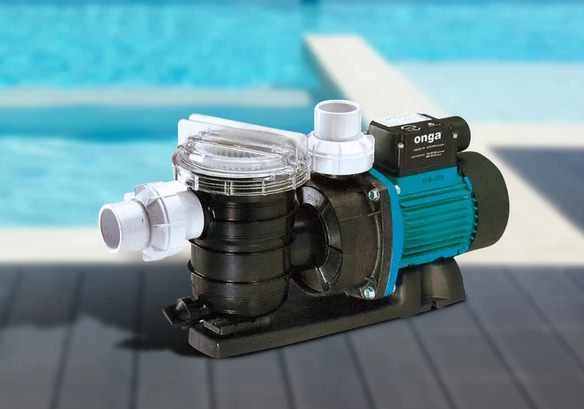
Calculate your actual cost
This uses simple, exact math — watts × hours × your electricity rate — no hidden assumptions. Fill in your own numbers below.
Check the motor label, or your model's spec sheet. Typical: 750–2,500W single-speed, 200–1,100W variable-speed on a low daily setting.
Most residential pools run 6–12 hours/day for adequate turnover.
Check a recent bill — US average is roughly $0.12–$0.18/kWh, but varies significantly by state and utility.
This is a direct calculation from the numbers you enter, not a generic estimate — accuracy depends on how accurate your wattage, hours, and rate inputs are.
What actually moves this number
- Switching from single-speed to variable-speed
- The single biggest lever available. A variable-speed pump can run its full daily filtration cycle at a much lower wattage than a single-speed pump running flat-out the whole time — commonly 50-70% less running cost for the same job. See our inground pump guide for the real payback math.
- Reducing run time without under-filtering
- Running only as long as needed for proper turnover (roughly once every 8 hours) rather than an overly long habitual schedule cuts cost directly — but don't cut run time below what your pool actually needs just to save money; under-filtering causes its own problems.
- Running during off-peak hours
- If your utility uses time-of-use pricing, shifting pump run time to off-peak hours (commonly overnight or early morning) can cut cost meaningfully even with identical total run time and wattage.
- Pump size matched to actual pool need
- An oversized pump running more power than the pool's actual turnover requirement wastes money continuously — see our above-ground and inground pump guides for correct sizing.
Try it with a variable-speed pump
Re-run the calculator above with a variable-speed pump's actual low-setting wattage (often 200-400W for routine filtration, versus 1,500-2,500W+ for a comparable single-speed pump running at full power) to see the real difference for your own run-time and rate numbers — the gap is usually larger than people expect once it's an actual dollar figure rather than an abstract percentage.
Reading your utility bill correctly
- Finding your actual rate
- Look for a line item showing cost per kWh (kilowatt-hour) — this is the number to use in the calculator above, not your total monthly bill divided by usage, which can be skewed by fixed service charges that don't scale with actual electricity consumption.
- Time-of-use rate plans
- Many utilities now offer (or require) rate plans that charge different amounts by time of day — often a peak rate for afternoon/evening hours and a meaningfully lower off-peak rate overnight or early morning. If you're on one of these plans, use your off-peak rate in the calculator for pump hours scheduled during that window, since the flat "average rate" understates the savings available from smart scheduling.
- Seasonal rate changes
- Some utilities charge more during summer peak-demand months than winter — if your rate varies seasonally, the calculator's result for peak season may differ from the annual average, worth checking if your bill shows meaningful seasonal variation.
Comparing scenarios side by side
The real value of a calculator like this is comparing options against each other, not just getting one static number. Try running through these scenarios with your own rate to see which change actually moves the needle most for your situation:
- Current pump vs a variable-speed replacement
- Enter your current pump's wattage and hours, note the annual cost, then re-run with a variable-speed pump's typical low-setting wattage (200-400W) for the same hours — the difference is your potential annual saving from switching pump types, which you can weigh against the pump's purchase cost per our inground pump guide.
- Current hours vs reduced hours
- If you're currently running longer than your pool's actual turnover requirement, compare your current hours against a reduced, correctly-sized run time to see the saving from right-sizing your schedule alone, with no equipment change needed.
- Peak-rate hours vs off-peak hours
- If you're on a time-of-use plan, compare the same wattage and hours at your peak rate versus your off-peak rate to see the saving available purely from rescheduling, without changing equipment or run time at all.
Environmental angle, if that matters to you
Beyond the direct dollar cost, pump electricity use has a real energy footprint — for owners who care about this alongside cost, the same variable-speed-pump and off-peak-scheduling changes that reduce your bill also reduce total electricity draw and, particularly if you're on an off-peak plan that shifts demand away from grid-strain peak hours, can have a modest positive effect on overall grid demand patterns. This isn't the primary reason most owners make these changes, but it's a genuine secondary benefit worth mentioning for anyone weighing the upgrade decision partly on those grounds.
If your pump is running more than you think it should be
Check the actual timer or automation schedule
It's surprisingly common for a pump's programmed schedule to have drifted from what an owner assumes it's set to — a power outage resetting a mechanical timer, or a schedule changed once and forgotten, can mean the pump is running considerably more (or less) than intended. Physically check the current program rather than assuming it matches what was originally set.
Confirm the pump isn't running due to another triggered function
Some automation setups run the pump automatically for other reasons — a salt chlorinator cycle, a heater demand call, or a cleaner cycle — on top of the base filtration schedule, meaning actual run time can exceed the filtration schedule alone. Check your automation system's full logic, not just the primary filtration timer.
Why the "8-hour rule" isn't a fixed number
Turnover rate — the time to circulate a volume of water equal to the entire pool — is commonly targeted at once every 8 hours, but the exact hours needed to hit that depends on your pump's actual flow rate (gallons per minute) against your pool's total volume, not a flat number that applies to every pool. A larger pool or a lower-flow pump needs more hours to hit the same turnover target; a smaller pool or higher-flow pump needs fewer. Check your filter and pump's rated flow rate against your pool's gallon capacity for a more precise number than the general rule of thumb. See our pool filters guide for more on turnover rate.
How this compares to other home appliance running costs
Context helps make the number meaningful. A pool pump running 8 hours a day at 1,500W uses roughly the same daily electricity as running a central air conditioner for a couple of hours, or a clothes dryer for a full load cycle several times over. It's a genuinely significant single appliance in most homes' electricity use — often one of the largest individual line items on a summer utility bill for a pool-owning household, which is exactly why the pump is the single highest-leverage place to cut cost, more so than almost any other change available to a pool owner.
Single-speed, dual-speed, and variable-speed compared directly
- Single-speed pump
- Runs at one fixed power level whenever it's on — typically 1,000-2,500W depending on horsepower. Cheapest to buy, most expensive to run continuously, since it has no lower-power mode for routine filtration.
- Dual-speed pump
- Offers a high setting (comparable to single-speed) and a lower fixed setting for routine filtration, typically 400-800W on low — a middle ground that captures some but not all of the efficiency gain of true variable speed.
- Variable-speed pump
- Can be dialed to the exact flow rate actually needed rather than choosing between fixed presets, often running as low as 200-400W for routine filtration — since power draw drops roughly with the cube of speed, even a modest speed reduction produces an outsized power saving. See our inground pump guide for the full payback math against upfront cost.
A worked example across pump types
At a $0.15/kWh rate and 8 hours/day: a 1,500W single-speed pump costs roughly $657/year to run. A dual-speed pump on its 600W low setting for the same 8 hours costs roughly $263/year — already a meaningful drop. A variable-speed pump running its equivalent job at 300W costs roughly $131/year — around 80% less than the single-speed baseline for functionally the same filtration job. Run these three wattage figures through the calculator above with your own rate and hours to see the actual dollar gap for your specific pool, rather than relying on this generic example.
A quick sanity check on your number
If your result seems surprisingly high
Double-check the wattage input first — horsepower rating alone doesn't reliably tell you actual watts, since efficiency varies by pump design. If you're guessing rather than reading an actual label or spec sheet, that's the most likely source of an inflated number.
If your result seems surprisingly low
Confirm your hours-per-day input reflects your pump's actual programmed schedule, not just how long you think it should run — many owners underestimate this, especially with an older timer that's never been adjusted since installation.
Why we built this as exact math, not an estimate range
Unlike our broader annual ownership estimator, which necessarily works in ranges given how many variables affect total cost, pump running cost is one of the few pool expenses that can be calculated exactly rather than estimated — the physics of watts, hours, and electricity rate is simple, fixed math with no hidden assumptions once you know your actual numbers. That's why this calculator gives a single precise figure rather than a range: the accuracy is only as good as your inputs, but the calculation itself isn't an approximation.
Using this alongside your full pool budget
Pump electricity is usually the single largest controllable running cost on a pool, but it's one piece of the bigger picture — see our true cost of pool ownership guide for how it fits alongside chemicals, heating, and maintenance approach in a full annual estimate, and our sizing guides if the numbers above suggest your current pump might be genuinely oversized or undersized for your actual pool.
Bookmark this page and revisit it whenever your electricity rate changes, your schedule changes, or you're weighing a pump upgrade — a two-minute recalculation with updated numbers is far more useful than remembering a figure calculated months or years ago under different conditions.
Common questions
Where do I find my pump's wattage?
Check the manufacturer's label on the pump motor itself, which usually lists amps and volts (multiply them for watts) or wattage directly — or check the specification sheet for your exact model number, since horsepower rating alone doesn't reliably tell you actual power draw.
How many hours a day should my pool pump actually run?
Enough to turn over the pool's full water volume roughly once every 8 hours, which for most residential pools works out to somewhere in the 6-12 hour range depending on pump flow rate and pool size — see our pool filters guide for more on turnover rate.
Is my electricity rate the same all day?
Not for many utility customers — time-of-use rate plans charge more during peak afternoon/evening hours and less overnight or early morning. If yours does, running the pump during off-peak hours can meaningfully cut cost even without changing total run time.
How much can a variable-speed pump actually save versus this calculator's single-speed estimate?
Often 50-70% off an equivalent single-speed pump's running cost, since a variable-speed pump can run its full daily filtration cycle at a much lower wattage than a single-speed pump running flat-out the whole time — re-run the calculator with your variable-speed pump's actual low-speed wattage to see your specific savings.
Does this calculator account for a heater's electricity use too?
No — this is specifically for pump electricity. A gas or electric heat pump adds its own separate running cost, covered in our pool heaters guide and rolled into the broader estimate in our ownership cost guide.