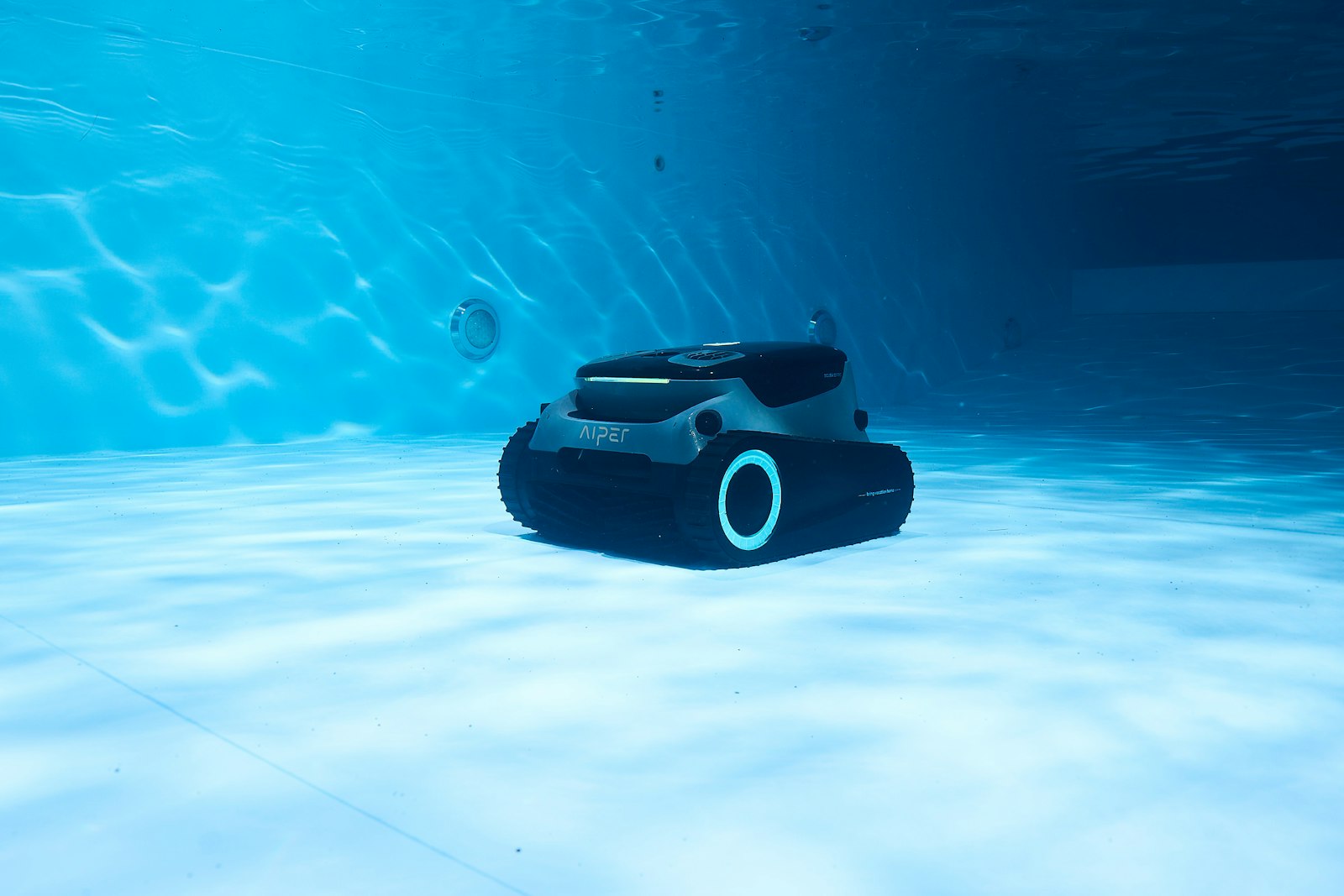
Two different symptoms, two different diagnostic paths
"Leaving lines" and "missing spots" often get lumped together, but they usually point in different directions. Lines are typically a debris-handling problem — the cleaner is moving over dirt without lifting it. Missed spots are typically a navigation problem — the cleaner genuinely isn't reaching certain areas often enough. Both are common, both are fixable, and neither usually means the unit itself has failed.
Why track lines actually appear
- A full or clogged filter bag/basket
- By far the most common cause. Once the filter reaches capacity, the cleaner keeps moving and brushing but has nowhere to put newly collected debris, so it drags along the floor instead of lifting into the unit — leaving a visible streak behind it.
- Worn or clogged brushes
- Brushes that have flattened with age, or picked up hair and debris wrapped around the axle, lose their ability to agitate debris loose from the surface before the suction or scrubbing mechanism can lift it.
- A genuinely heavy debris load for one cycle
- A pool that's gone several days without cleaning, or just had a windy or high-pollen day, can simply have more debris than a single cycle's filter capacity can fully handle — this isn't a fault, just a capacity limit being hit.
- Fine debris that's genuinely hard to lift
- Very fine silt or sand-like debris is intrinsically harder for any cleaner to fully lift than leaves or larger particles, and can leave a faint film or line even from a clean, well-maintained unit.
Fixing track lines
-
Empty and rinse the filter after every use
This single habit resolves the majority of track-line complaints. Don't wait until the filter "looks full" — debris capacity is used up well before a filter looks visually packed.
-
Inspect and clean the brushes
Remove any wrapped hair, string, or debris from around the brush axles, and check for flattening or wear — brushes that no longer spring back to shape after being pressed aren't agitating debris effectively anymore.
-
Run a second cycle for a heavy debris day
If the pool has an unusually heavy load, running the cleaner twice — emptying the filter in between — clears what a single cycle's capacity couldn't handle.
-
Follow up with a manual brush for persistent fine film
For very fine silt-type debris that a robotic cleaner struggles to fully lift, a quick manual brush pass afterward finishes the job a robot alone sometimes can't.
Why spots get missed, cycle after cycle
- Fixed or semi-randomized navigation patterns
- Most robotic cleaners don't build a real-time map of the pool the way a modern robot vacuum does indoors — they follow a programmed or partly randomized pattern, meaning some spots (particularly corners and edges) are statistically less likely to get covered on any given cycle.
- The same drop-in point every time
- Always starting the cleaner from the same spot biases its path — over many cycles, areas near that starting point tend to get more coverage than areas the pattern takes longer to reach.
- Steps, ladders, and irregular pool shapes
- These are genuinely harder for most cleaners to navigate consistently than an open rectangular floor — it's common and expected for these specific features to need occasional manual attention even with a cleaner in good working order.
- A short cycle time relative to pool size
- A cleaner set to a shorter cycle than the pool genuinely needs simply runs out of time before reaching every area — check your model's recommended cycle length against your actual pool size.
- A drive track or wheel losing traction
- A track or wheel that's worn, has debris caught in it, or is losing grip on a specific surface type (like a slicker painted or fiberglass finish) can cause the cleaner to slip or stall repeatedly in the same area, effectively skipping it.
Fixing missed spots
-
Vary the drop-in point
Start the cleaner from a different spot in the pool each time (or every few cycles) to naturally even out coverage over time, rather than always biasing toward the same starting area.
-
Check the cycle length against your pool size
Confirm the programmed cycle time is appropriate for your actual pool size — if it's set shorter than the manufacturer's recommendation for a pool your size, extend it.
-
Inspect drive tracks and wheels for wear or debris
Clear out any hair or debris caught in the tracks or wheel mechanism, and check for visible wear that might be causing slippage on specific surface areas.
-
Manually spot-clean known problem areas
For steps, tight corners, or an irregular pool shape that consistently gets missed, a quick manual brush or vacuum pass on just that area between full cycles is often more efficient than trying to force full robotic coverage of a spot it structurally struggles with.
-
Check if a newer model in your lineup has mapping
Some premium robotic cleaners now include actual pool-mapping navigation (tracking coverage in real time rather than a fixed pattern) specifically to solve this problem — worth knowing about if missed spots are a persistent, serious issue with an aging unit due for replacement anyway. See our cleaning robots guide.
Does pool shape make one cleaner type a better fit?
A simple rectangular pool is the easiest shape for any cleaner type to cover consistently, regardless of navigation method. Freeform, kidney, or otherwise irregular pool shapes genuinely favor cleaners with more sophisticated navigation logic — some premium robotic models specifically advertise better handling of irregular shapes, and this is worth weighing seriously if your pool's shape has been a persistent contributor to coverage problems despite otherwise good maintenance. It's a legitimate reason to prioritize navigation quality over other features when replacing an aging cleaner on a non-rectangular pool.
When it's actually a hardware problem, not a maintenance one
The cleaner stalls repeatedly in the exact same spot
If a specific location causes the cleaner to stop or get stuck every time, rather than just being under-covered, this points to a physical obstruction, a drop-off (like a step edge) the unit can't handle, or a genuine track/wheel fault — worth checking that spot specifically rather than assuming it's a general coverage issue.
Coverage has gotten noticeably worse over time
A cleaner that used to cover the pool well but has degraded gradually usually points to wearing mechanical parts (tracks, wheels, or the drive motor) rather than a chemistry or debris-load change — check the manufacturer's wear-part replacement guidance before assuming the whole unit needs replacing.
It's a suction-side or pressure-side cleaner, not fully robotic
Suction and pressure-side cleaners rely on the main pump's flow or a booster pump rather than independent navigation logic, and are inherently more prone to repetitive, uneven coverage patterns than a self-contained robotic unit — if coverage has always been inconsistent rather than a recent change, the cleaner type itself may be the underlying factor.
A preventive maintenance schedule that actually prevents these problems
-
After every cycle
Empty and rinse the filter bag or basket. This single habit prevents the majority of track-line complaints and takes under two minutes.
-
Weekly
Inspect the brushes for wrapped hair or debris, and check the drive tracks or wheels for anything caught in them. A quick visual check catches problems before they cause a full missed-spot pattern.
-
Monthly
Do a more thorough filter clean (some models support a deeper rinse or a filter-cleaning solution soak beyond the routine rinse), and check the cable (for tethered models) or the unit's caddy/storage setup for wear.
-
Seasonally
Check the manufacturer's wear-part replacement guidance for tracks, brushes, and impellers — proactively replacing parts nearing the end of their rated life prevents the gradual coverage decline that otherwise creeps up unnoticed over a season.
Comparing coverage issues across cleaner types
- Fully robotic (self-contained, independent navigation)
- Generally the most consistent coverage of the three types, since it doesn't depend on the main pump's flow or a booster pump's pressure — issues here are usually filter, brush, or track-related rather than systemic to the design.
- Pressure-side
- Coverage quality depends partly on consistent water pressure from the return line or booster pump — a booster pump losing performance, or pressure varying across the pool's plumbing layout, can cause uneven coverage that looks like a navigation problem but is actually a pressure-delivery issue.
- Suction-side
- Coverage depends on the main pump's suction and can be affected by anything reducing overall system flow — a partially clogged skimmer basket or a filter overdue for cleaning can reduce a suction-side cleaner's effectiveness in ways that look like the cleaner itself is underperforming.
If you're troubleshooting a suction-side or pressure-side cleaner specifically, check the broader pump and filter system's health (see our pump and filter troubleshooting guide) before assuming the cleaner itself is at fault — these cleaner types are more dependent on the rest of the system working well than a fully independent robotic unit.
When upgrading solves a problem that maintenance can't
If you've worked through the filter, brush, track, and drop-point troubleshooting above and coverage is still consistently poor, it's worth being honest about whether the specific model or cleaner type is simply a mismatch for your pool. An older suction-side cleaner struggling with an irregular freeform pool shape, for instance, may never achieve the coverage a modern robotic unit with better navigation logic would manage on the same pool — at that point, continued troubleshooting has diminishing returns compared to evaluating whether a different type of cleaner, per our cleaning robots guide, would actually solve the underlying mismatch rather than just patching around it.
A realistic expectation to set
Even a well-maintained, well-programmed robotic cleaner in good working order isn't going to achieve perfectly even 100% coverage on every single cycle — some unevenness is normal and expected, which is part of why routine brushing (see our accessories guide for a recommendation) remains worth doing even for owners running a robot regularly. The goal with the troubleshooting above is bringing a cleaner back to its normal expected performance, not chasing a perfect result no model actually delivers.
Keeping a simple maintenance log
For a cleaner with a persistent, hard-to-pin-down coverage issue, keeping a brief note each time you empty the filter — roughly how full it was, how heavy the debris load felt — can reveal a pattern that's hard to spot from memory alone, like a specific day of the week or weather condition that consistently correlates with worse coverage. This kind of simple tracking often surfaces the actual root cause (a particular windy day loading the filter early in a cycle, for instance) faster than troubleshooting from scratch each time the problem recurs.
Common questions
Why does my robotic pool cleaner keep missing the same spot?
Most robotic cleaners use a pre-programmed or semi-randomized navigation pattern rather than mapping the pool in real time, so a spot that's slightly outside its typical path (a corner, a step, near a ladder) can get consistently skipped cycle after cycle. Repositioning the drop point or running it more often are the two most reliable fixes.
Are track lines on the pool floor a sign of damage?
Not usually — visible track lines are almost always debris being pushed rather than lifted, from a clogged filter bag or worn brushes, not physical damage to the pool surface. Genuine surface damage looks different: scratches or dulled patches that don't correspond to the cleaner's exact path.
How often should I clean my robotic cleaner's filter?
After every single use for a heavily used or debris-prone pool, or at minimum weekly for lighter use — a filter that's even partially clogged is the single most common cause of both missed spots and visible track lines.
Can a robotic cleaner get confused by pool shape or steps?
Yes — irregular shapes, steps, and tight corners are genuinely harder for most models to navigate consistently than a simple rectangular pool, and it's common for these specific features to need occasional manual spot-cleaning even with a well-maintained cleaner.